
Compact Continuous
Asphalt Mixing Plant
A relocatable design built around your road projects. Continuous production from aggregate feeding to hot mix discharge.
80–200 t/h
Four production capacities
Continuous mixing
Coordinated feeding and production
Relocatable design
Chassis designed for transfer between sites
The right capacity for your project.
Explore the models to match your daily hot mix demand, operating hours and site logistics. Assess capacity alongside aggregate moisture, mix design and production temperature.
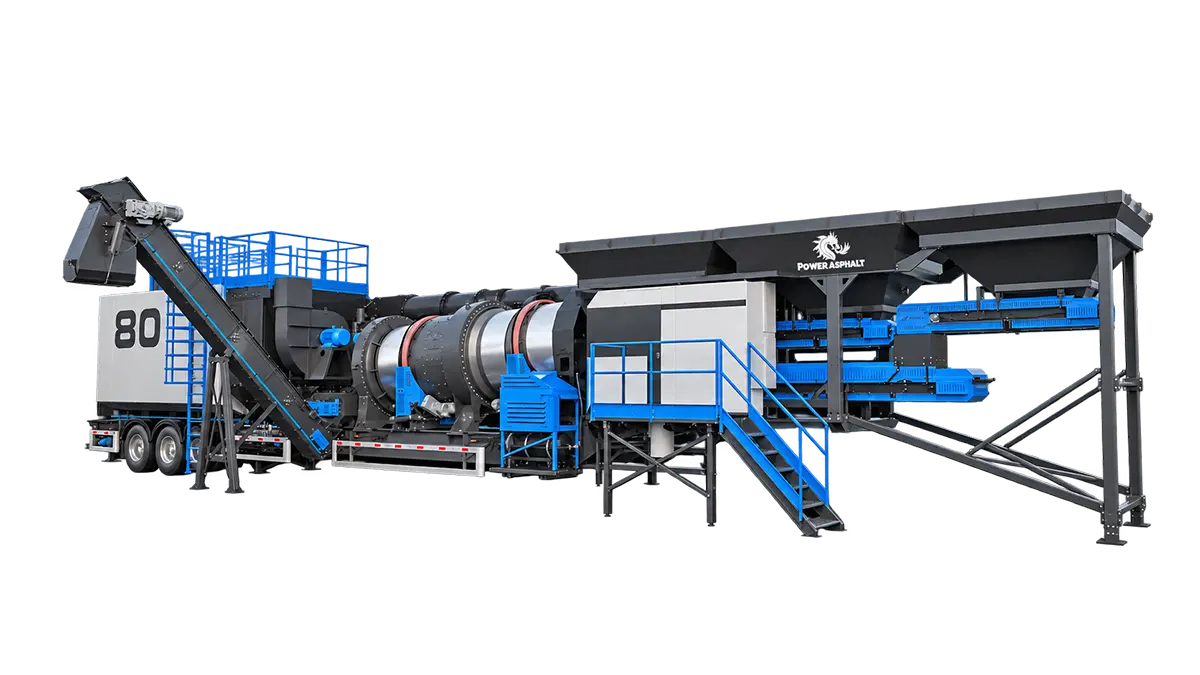
BOZOK 80
Single-chassis continuous production at 80 t/h, with 4 × 7.5 m³ cold feed bins and PowerControl SCADA automation.
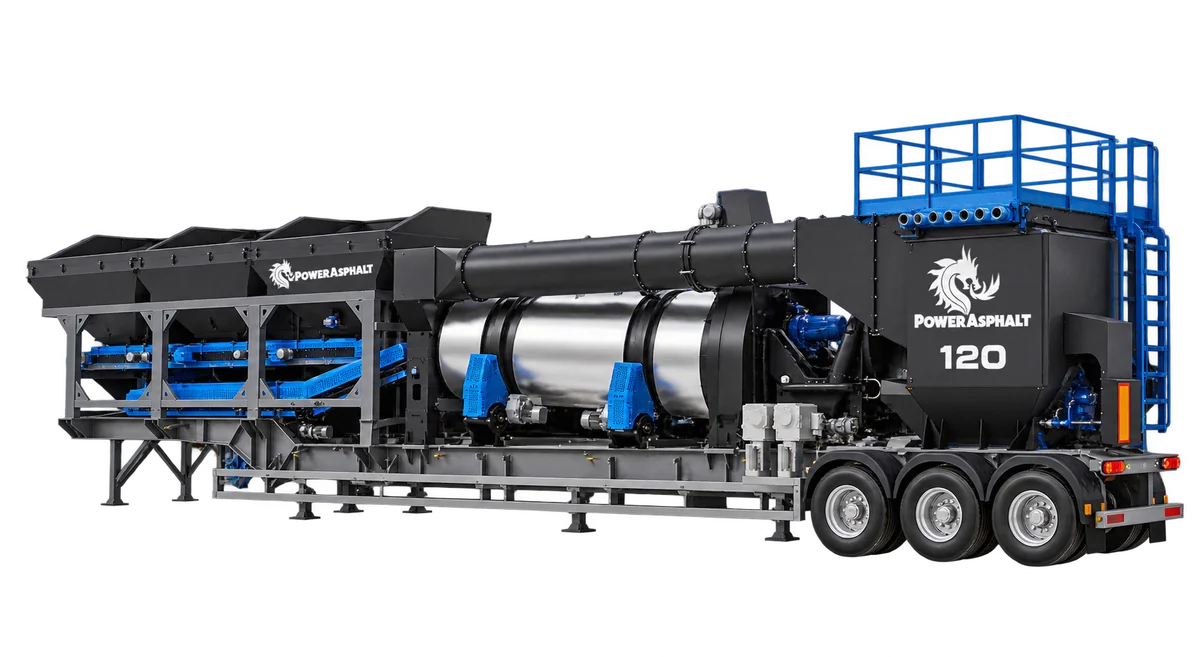
KARTAL 120
Continuous production at 120 t/h, with 4 × 10 m³ cold feed bins, a 10 MW burner and PowerControl SCADA automation.
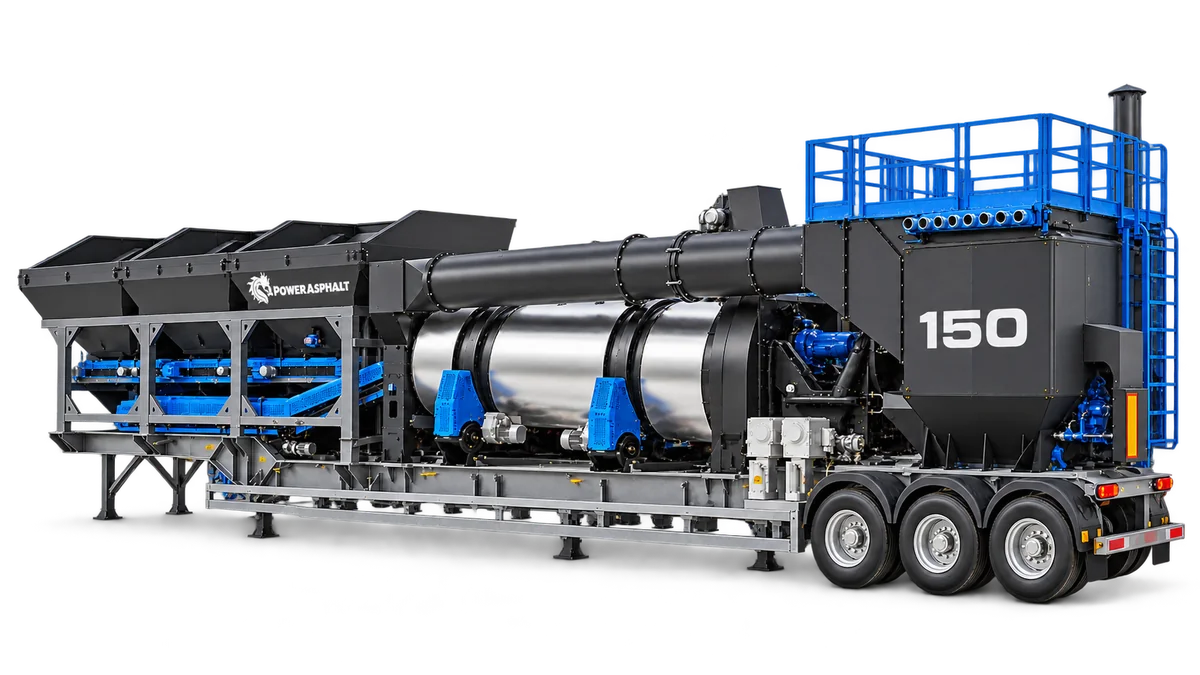
TULPAR 150
Continuous production at 150 t/h, with 4 × 12 m³ cold feed bins, a 12 MW burner and PowerControl SCADA automation.
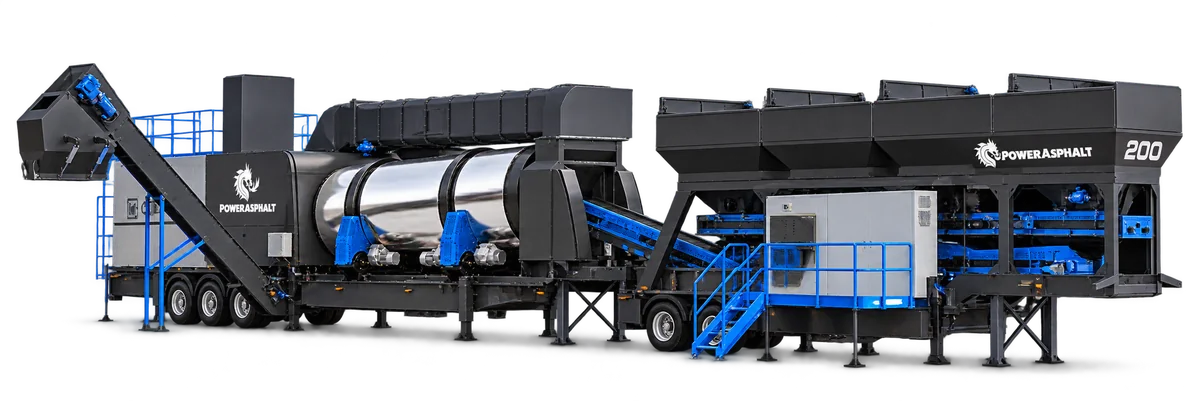
BORA 200
Continuous production at 200 t/h, with 4 × 15 m³ cold feed bins, a 15 MW burner and PowerControl SCADA automation.
Controlled flow from aggregate to hot mix.
Feeding and proportioning
Different aggregate fractions are stored in cold feed bins. Feed rates are adjusted to the mix design and required production rate.
Drying and filtration
Aggregate is heated in a rotary dryer. Exhaust gas and dust pass through the filtration system; drying performance is assessed against aggregate moisture and fuel conditions.
Mixing and load-out
Heated aggregate, bitumen and mineral filler enter the continuous mixing process. Discharge and hot mix storage arrangements are selected to suit truck movements and the dispatch schedule.
A flexible approach to plant layout.
A compact continuous asphalt mixing plant suits projects where relocation and reassembly form part of the production programme. A mobile chassis still requires planned site preparation, including ground bearing capacity, access roads, power, fuel and bitumen logistics.
Operating conditions matter as much as capacity.
Production target
Assess shift duration, daily tonnage, truck turnaround and paving crew demand together. Nominal capacity alone does not guarantee daily output.
Materials and mix design
Aggregate moisture, grading, mix temperature and bitumen properties affect drying load and throughput. Additive and recycling requirements are assessed separately in the technical proposal.
Transport and installation
Route clearances, axle loads, permits and lifting equipment are planned for each site. Transport dimensions and installation scope are confirmed in the approved layout documents.
Compact continuous asphalt plant FAQs
What is a compact continuous asphalt mixing plant?
It is an asphalt production plant that combines continuous material feeding and mixing with a relocatable equipment layout. Material flow is controlled continuously rather than through the separate weighing and mixing cycles of a batch plant.
Which production capacities are available?
The series offers nominal capacities of 80, 120, 150 and 200 t/h. Capacity selection takes account of aggregate moisture, mix design, production temperature and operating conditions.
How is the price of a compact continuous asphalt plant determined?
Pricing depends on capacity, fuel and burner configuration, bitumen and filler equipment, filtration, automation, transport and commissioning scope. Compare quotations with the same equipment specification.
Does a mobile plant require site preparation?
Yes. Ground suitability, grading, safe access, electrical connections and utilities must be planned. A mobile chassis still requires site-specific assessment of foundations and infrastructure.
Let’s plan your production requirements.
Share your required output, aggregate properties and site conditions. We will review the equipment and layout for your compact continuous asphalt mixing plant.