High mobility
Portable units that adapt to changing construction sites.
Flexible production for changing sites.
POWER ASPHALT SUNGUR 160 is a mobile batch asphalt plant designed for aggregate with 3% free surface moisture and nominal output of 160 t/h. Its transportable chassis, modular units and separate aggregate, filler and bitumen weighing support relocation and production to the mix design.
160
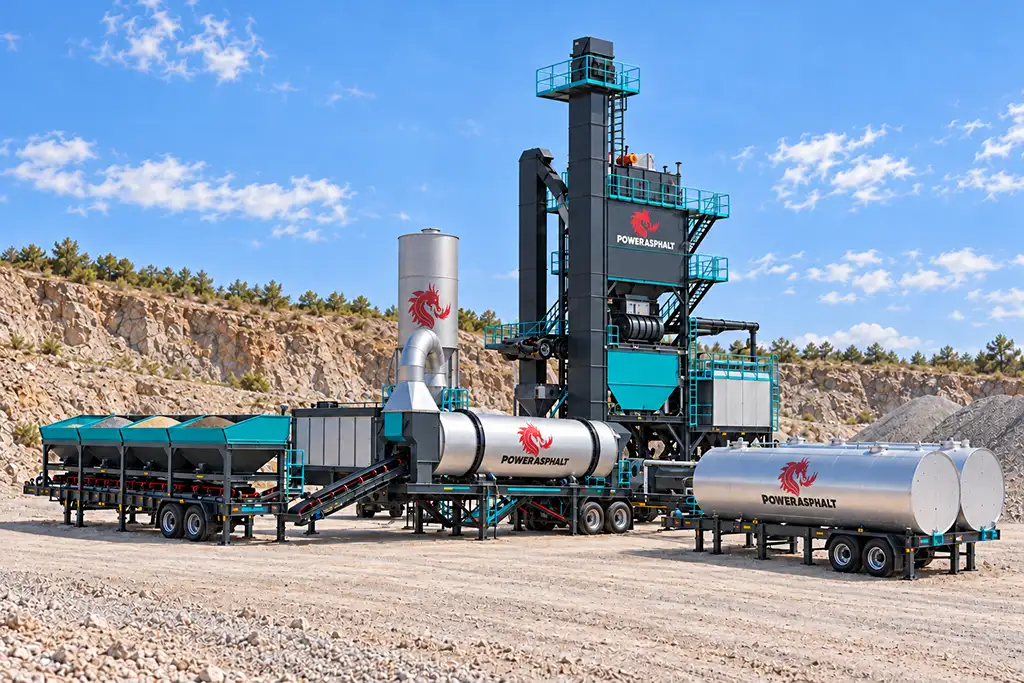
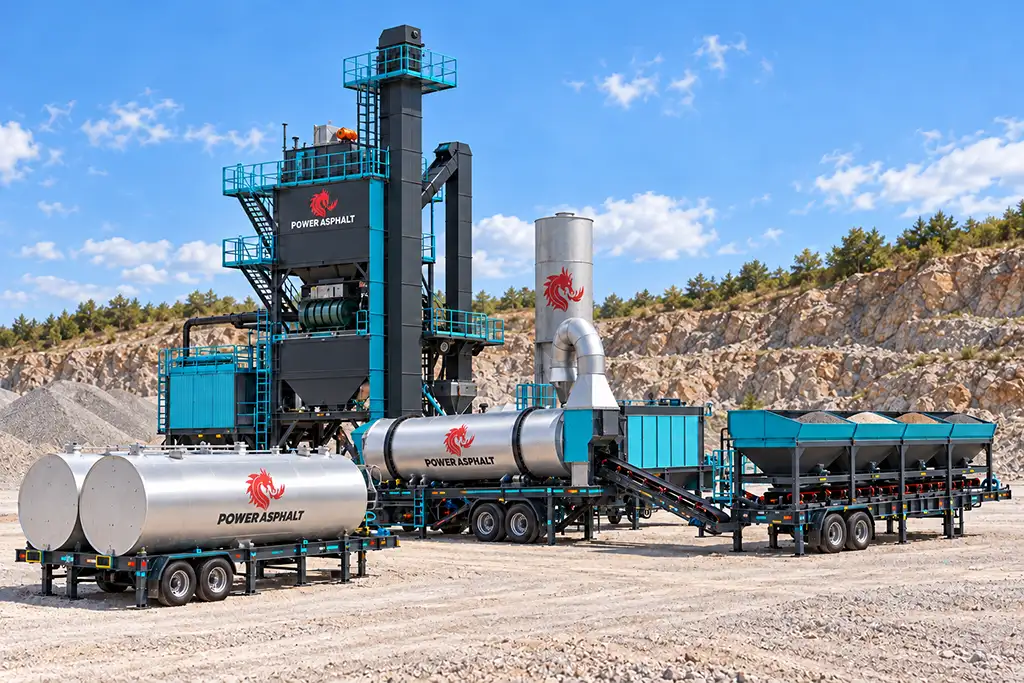
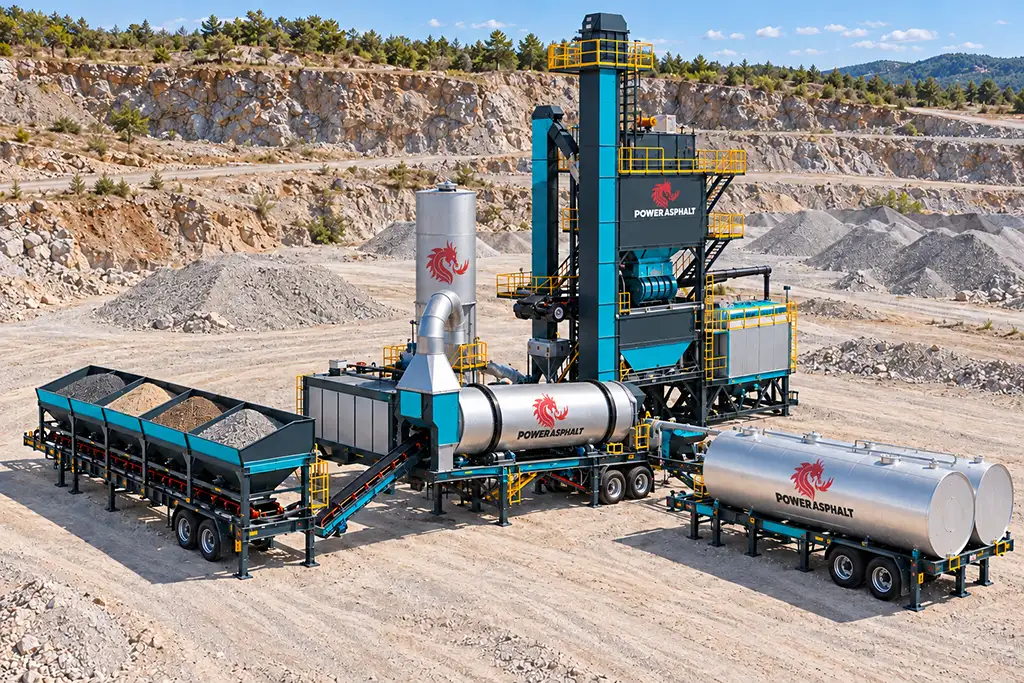
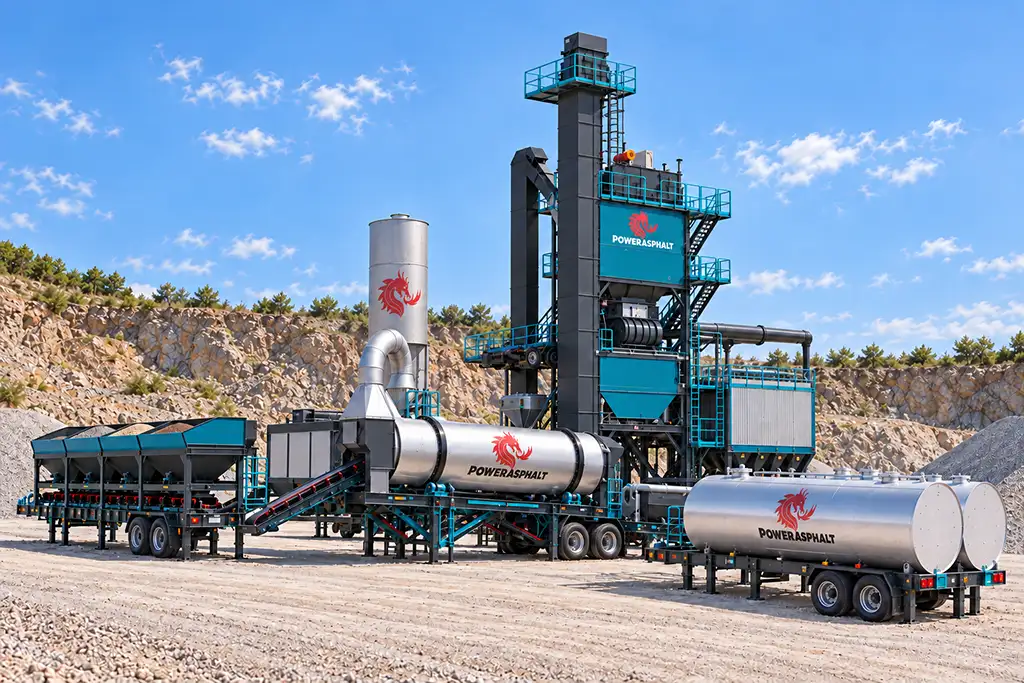
Mobile asphalt plants are designed for road contractors relocating between sites, with assembly and dismantling in mind. Reduced foundation and lifting requirements can simplify installation. Aggregate, filler and bitumen are weighed to the recipe in the batch process, with production monitored through automation.
Portable units that adapt to changing construction sites.
Less need for concrete foundations and cranes.
Manage production processes from a single point with automation.
Remote connection and spare parts support.
| Model | SUNGUR 160 |
|---|---|
| Production capacity | 160 t/h (at 3% aggregate surface moisture) |
| Production method | Mobile batch production |
| Layout | Transportable chassis and modular units |
| Cold aggregate feed bins | 5–6 × 12 m³; 60–72 m³ total |
| Burner thermal capacity | 14,000 kW (14 MW) |
| Dryer drum dimensions | Ø2,200 × 8,500 mm (internal diameter × length) |
| Hot aggregate screen | 5–6 decks, with bypass |
| Hot aggregate bin | 20 tonnes |
| Mixer capacity | 2,200 kg/batch; twin-shaft |
| Batch cycle time | 45–60 seconds; depending on mix and operating conditions |
| Filter system | Reverse-air baghouse filter with meta-aramid/Nomex bags |
| Bitumen tank | Insulated, with thermal-oil heating coil |
| Filler silo | 50 tonnes |
| Aggregate / filler / bitumen weigh hopper capacities | 2,500 / 300 / 200 kg |
| Control system | PowerControl SCADA automation |
| Service | Remote connection and spare parts support |
ⓘ Nominal capacity is based on 3% aggregate surface moisture. Actual output depends on moisture, mix, feed continuity and site conditions. Filter airflow, power infrastructure, transport and installation requirements are confirmed in the final design.
Project requirements, site conditions and target capacity are assessed together. The layout and unit configuration are agreed before manufacturing, delivery and commissioning are coordinated.
Yes. Modular units can be placed specifically for the project by evaluating land dimensions, material flow and operating needs.
Remote access through PowerControl and guidance from our service team support fault diagnosis. Widely available components simplify spare parts sourcing.
Price depends on capacity, mobile or stationary configuration, fuel, bitumen storage and optional units. Share your requirements for a project-specific technical quotation.
Nominal capacity is specified for aggregate with 3% free surface moisture. Actual output depends on aggregate moisture, mix design, feed continuity and ambient conditions.
The transportable chassis and modular design allow dismantling and reassembly to be planned. Route, module dimensions, lifting equipment and infrastructure at the new site are assessed together.
Depending on the burner configuration, fuel oil, diesel, natural gas or LPG may be considered. The burner and fuel supply equipment are selected during technical quotation.
Yes. Suitable ground, module supports, power supply and utilities are required. Erection and commissioning time depends on site readiness and equipment scope.
In the SUNGUR 160 mobile asphalt plant, batch production follows an integrated process from material preparation to truck loading.
Fractions stored in 60–72 m³ cold feed bins with 5–6 compartments are metered to the dryer by belt feeders. Heated aggregate is elevated to a 5–6-deck vibrating screen and separated into hot aggregate bins.
Aggregate, filler and bitumen are weighed separately to the recipe and combined in a 2,200 kg/batch twin-shaft mixer. The 45–60-second cycle depends on the mix and operating conditions. Finished asphalt is dispatched through the selected discharge and storage arrangement.
Dryer gases are treated by a reverse-air baghouse filter with meta-aramid/Nomex bags. Captured filler can return where the mix and equipment allow. Airflow and emissions are assessed with equipment, fuel, operating conditions, maintenance and project requirements.
Automation combines production monitoring and service access, allowing the operator to follow recipes, weighing and plant status from one control system.
Mix recipes are stored and dosing and weighing values monitored. Production reports can be archived for operational follow-up. User permissions and languages are configured to suit the operator organisation.
Automatic, semi-automatic and manual modes support production and maintenance. Interlocks and alarms assist the operator. With suitable network infrastructure and authorisation, VPN access enables remote diagnostics and parameter support.
The mobile chassis and modular units are planned together for relocation. Dismantling, transport, reassembly and commissioning are scheduled around the route, lifting equipment and site readiness.
Mobility does not eliminate site preparation. Ground bearing capacity, module layout and supports must suit project loads. Power, cabling, compressed air, required water connections and drainage are prepared for the new layout.
Cranes and lifting equipment are selected according to load weights and working radii in the erection plan.
At project completion, mechanical and electrical connections are disconnected in a controlled sequence and modules prepared for transport. After reassembly, connections, weighing systems, burner settings and safety functions are rechecked. Transport and recommissioning scope are defined in the quotation and site plan.
Standard units and optional systems are selected by considering mix design, production targets, storage needs and operating conditions together.
The insulated bitumen tank uses thermal-oil coil heating. A 50-tonne filler silo with a top filter and screw conveyor feeds production. Separate aggregate, filler and bitumen weighing supports mix dosing.
RAP, modified bitumen, liquid anti-stripping additives and fibre/cellulose feeding units can be considered. RAP proportion and feeding method depend on the selected system and mix specification.
Dryer flights, burner settings, insulation and maintenance are assessed together to manage heat transfer and fuel use. Cost per tonne and payback depend on fuel type, aggregate moisture, annual output, operating hours and local energy prices.
For SUNGUR 160, operator capability and maintenance planning are as important as plant delivery.
Emergency stops, interlocks, access platforms, guardrails and non-slip stairs support safe operation. Temperature monitoring, alarms and maintenance procedures for bitumen and thermal-oil circuits are defined with the project equipment.
Service and spare parts support covers mixer wear parts, filter bags, sensors and other maintenance items. Commissioning includes operator training, manuals, maintenance planning and weighing calibration. Service scope and response conditions are defined in the contract.
Contact our sales team for layout drawings, foundation designs, electrical diagrams and relevant conformity documents. The quotation for the SUNGUR 160 mobile asphalt plant depends on equipment scope, fuel selection, storage, transport and installation conditions.
Let’s talk about your production goals and plan the asphalt plant that suits you together.
Evaluate SUNGUR for projects requiring a 160 t/h mobile asphalt plant using the technical specifications on this page. Consider daily output, aggregate moisture, mix design, operating hours and layout alongside nominal capacity.
The quotation defines equipment scope, storage requirements, fuel and power infrastructure, transport and installation responsibilities. Compare models in the same range to identify the right capacity for your project.
Pricing is prepared for your project based on selected units, automation, storage and delivery terms. Send your capacity and site requirements for a current quotation.
Actual output depends on aggregate moisture, mix design, ambient conditions, feeding and the operating plan. Nominal capacity should be assessed against the expected project conditions.
We use essential cookies to operate this website. Analytics and marketing only load with your permission. You can change your choices at any time. Cookie policy