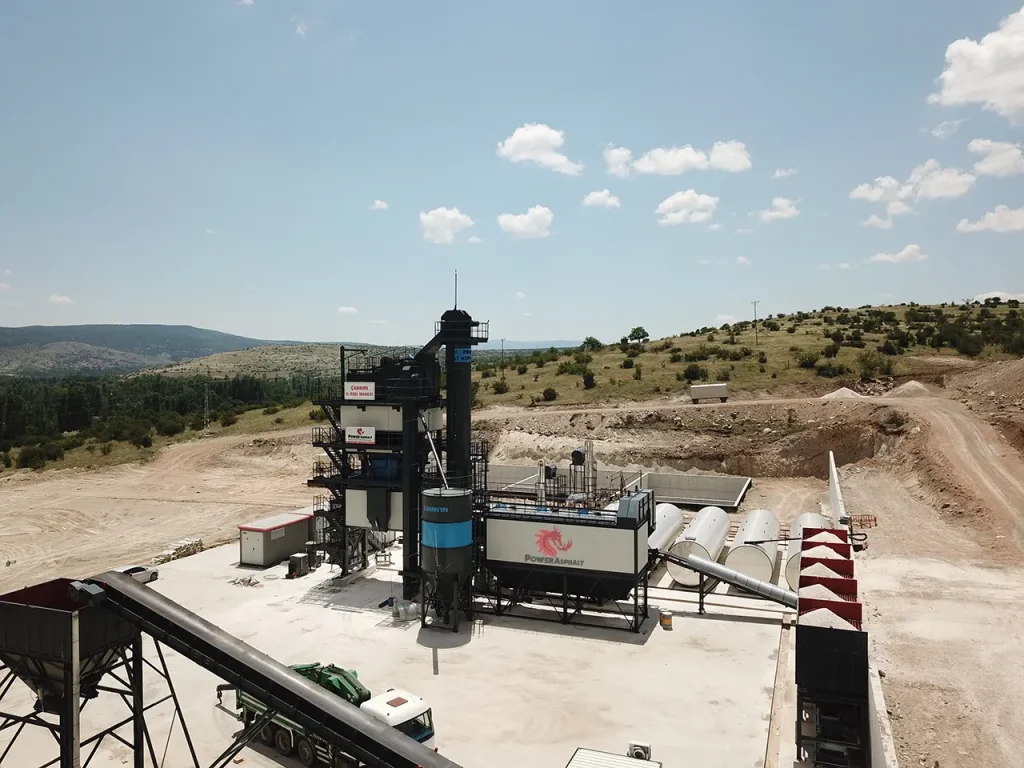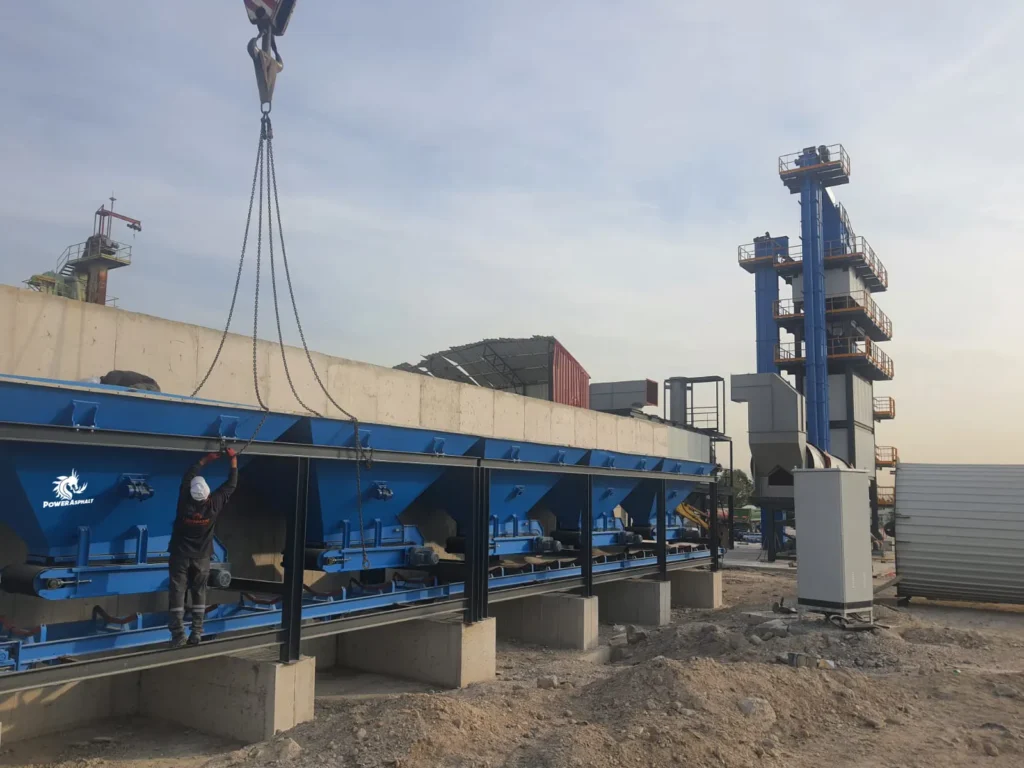
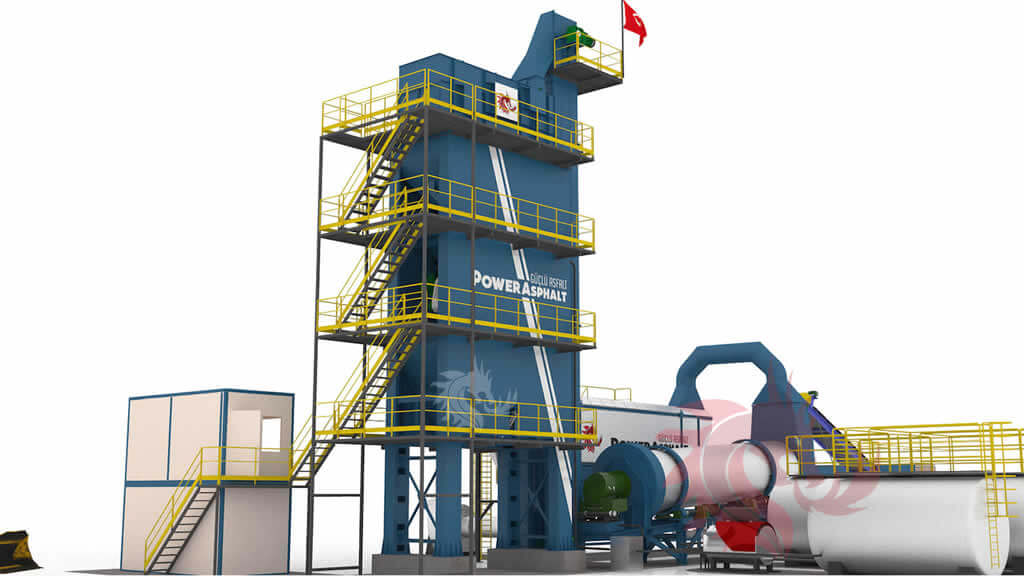
Stationary Batch Asphalt Plant; In asphalt production, aggregate stored in the plant area in different fractions is taken from stocks and fed into separate cold feeding silos. The opening of the covers under each silo and the speed of the conveyor belt are adjusted from the control cabinet. It is transported to the dryer with the help of belts. Thanks to the burner placed at the end of the dryer, the aggregate loses its moisture. For the aggregate moisture content to be appropriate, the burner temperature must be at least 185°C. If the burner gives a temperature less than 185°C, the aggregate cannot absorb its moisture. Excessive aggregate moisture also negatively affects asphalt durability and quality. Fuel oil or natural gas is generally used as fuel in the burner for drying and heating purposes. After the aggregate leaves the dryer, it is directed to elevators. From here it is transferred to the vibrating screen unit at the top level of the production tower. Sieves separate the aggregate according to its size and collect it in separate bunkers under the sieve. The first screen is a protective layer that prevents excessively coarse aggregate from entering the bunkers. This safety sieve is followed by two or three sieves that decrease in size from top to bottom. Dimensions of these sieves; Asphalt plantand the gradation of the mixture to be made. The sieves are designed so that the fine grains are transferred to the first hot bunker and the coarse grains are transferred to the other bunkers. In order for the aggregate to be sieved correctly, the sieve surface must be proportional to the amount of incoming aggregate. The capacity of the sieves must also be proportional to the capacity of the dryer and mixer. There are hot bunkers for each size under the sieves to store the heated and sieved aggregate of different sizes with minimum heat loss. In order to ensure continuity of production, there must be sufficient well-sifted aggregate in the bunkers when the mixer starts operating. In each bunker, there are indicators that indicate whether the aggregate has fallen below or exceeded a certain level. After being sieved, the aggregate stocked in hot bunkers is weighed to be added to the mixture. First, coarse and then medium and fine aggregates are taken. Finally, the elephants carried by the elephant elevator enter the mixture after being weighed in the elephant weighing machine. The reason for this sorting is to prevent thin material from leaking through the lid gaps. The final material left, coarse aggregate, will fill the gaps in the mixture. After the aggregate, fillers and bitumen are weighed in sufficient quantities for the mixture, they are poured into the mixer located under the weighing bunker. The time from opening the bunker cover to opening the mixer cover is called mixing time. The mixing time should be long enough for the aggregate to be dispersed uniformly and completely covered with bitumen. After the materials are mixed in the mixer, the covers are opened and poured into the dump truck and taken to the laying area.